Understanding the SERP Volatility Index: How to Read and React to Changes
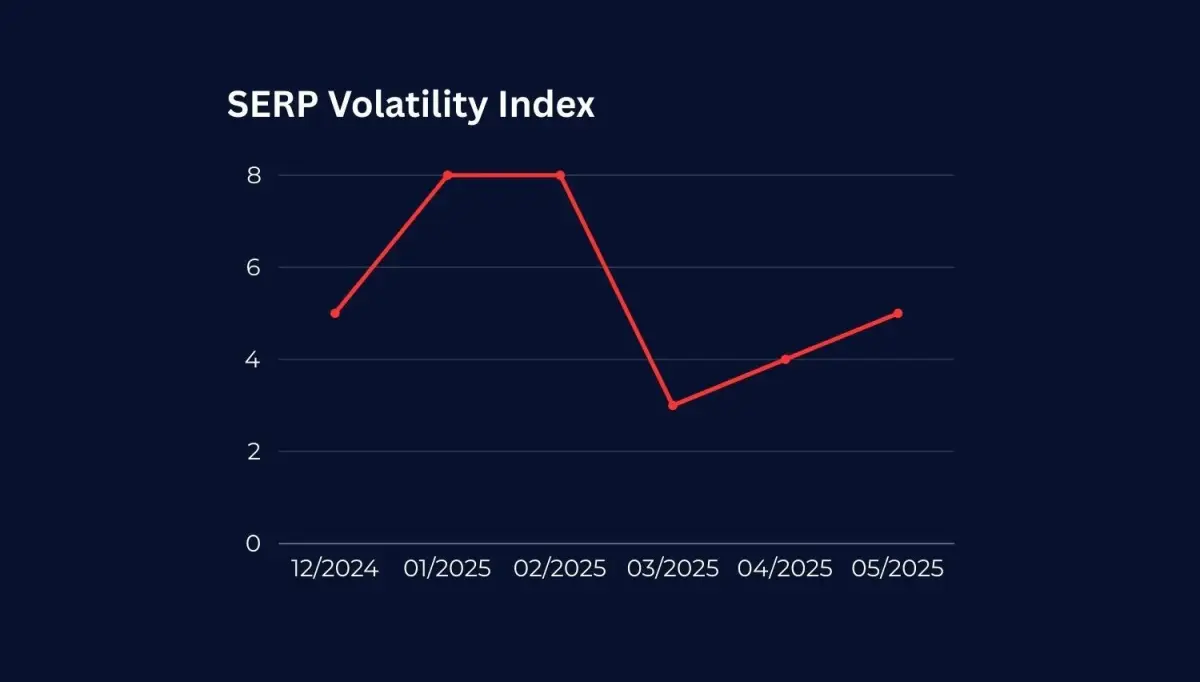
When the SERPs shift suddenly, it can feel like you’re flying blind—but you don’t have to be. The SERP Volatility Index is your compass. It helps you detect turbulence, interpret the signals, and avoid panic-driven decisions that hurt more than they help.
In this guide, you’ll learn exactly how the volatility index works, how to read its signals, and what actions to take when it spikes. Whether you’re calming a client or adjusting your SEO strategy, these tips will keep you grounded.
Let’s decode the chaos and take control.
What is the SERP Volatility Index?
The SERP Volatility Index measures the fluctuation of search engine results pages (SERPs) over a given period, usually daily.
It’s a way to assess the stability and instability of your website’s ranking positions on SERPs. A higher volatility index indicates more significant ranking changes, potentially due to algorithm updates or other factors, while a lower index suggests more stable rankings.
How to Interpret SERP Volatility Index
The SERP volatility index tracks changes in keyword rankings and assigns a score, typically on a scale from 0 to 10, reflecting the instability level.
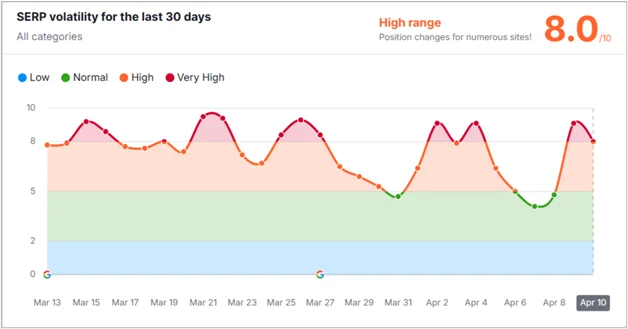
SERP volatility index
Think of it as a weather report on a scale of 1 to 10:
1. 0 to 5 (Normal Volatility):
On calm days (volatility score 0 to 5), the skies are clear. Rankings hold steady. Maybe a page or two shifts slightly.
Google tests things, user behavior shifts, and new content enters the index — nothing to stress over here. If you see small changes in rankings, it’s likely part of the natural search cycle.
2. 5 to 8 (High Volatility):
These are cloudy days (scores between 5 and 8). The wind starts picking up. You notice some sites inching up and others dropping a position or two. It’s not chaos, but it’s enough to make you check your SEO strategy.
This SERP volatility spike often means Google is experimenting with layout changes, rolling out targeted updates, or testing relevant signal shifts.
3. 8 to 10 (Very High Volatility):
When theindex hits above 8, buckle up. This is the SEO equivalent of a thunderstorm. SERPs are flashing and crashing.
One day, you’re on page one, and the next day, you’re buried under algorithm updates. You’ll see competitors leapfrog you. New domains pop up like weeds. Old players disappear. Google’s rolling something out, and it’s shaking the ground.
Hold off on instant fixes if your rankings change sharply during this period until the turbulence settles.
That’s why SEOs check the volatility index like farmers check the sky. It tells you if it’s time to water the crops or rush out and cover them before the hail hits.
Also, don’t interpret the index in isolation. Compare it to:
- Your Google Analytics (Did traffic also drop?)
- Your Search Console data (Any indexing issues?)
- Industry tools and SEO forums (Is this sector-wide?)
The volatility index tells you that something is happening. Your job is to discover why it happened and respond accordingly with strategic approaches.
SERP volatility doesn’t happen by coincidence. Let’s look at some factors that cause changes in SERPs.
Causes of SERP Volatility
This table provides a comprehensive view of the causes of SERP volatility and how to fix them.
| Causes | Descriptions | Solutions |
| Google Algorithm Updates | Changes in Google’s ranking algorithm can cause sudden shifts in rankings. | Stay informed on updates and adjust SEO strategies accordingly. |
| Competitor Activity | Competitors optimizing their content can lead to ranking shifts. | Use a keyword rank tracker to monitor competitor rankings and discover SEO threats early |
| On-Page SEO Issues | Errors like broken links, slow page speed, or poor mobile-friendliness affect rankings. | Regularly audit and fix on-page SEO issues (speed, mobile optimization). |
| Content Changes | Updating or removing content can cause temporary ranking shifts. | Ensure content updates are SEO-friendly and maintain keyword relevance. |
| Backlink Profile Changes | Loss of high-quality backlinks or gaining spammy links can impact rankings. | Monitor backlinks, disavow harmful ones, and build high-quality links. |
| Search Intent Shifts | Changes in user behavior or search intent can affect keyword relevance. | Use Keyword.com’s rank tracker to check search intent for different keywords and write content that matches it. |
| Local SEO Factors | Local businesses may experience fluctuations due to changes in local search patterns. | Optimize for local SEO (Google My Business, reviews, citations). |
| Technical Issues | Server downtimes, crawl errors, or poor site performance can impact rankings. | Regular technical audits and prompt issue resolution. |
| Seasonal Trends | Rankings can change due to seasonal or event-based trends. | Plan content and SEO strategies around predictable seasonal fluctuations. |
Other causes of SERP volatility are:
Keyword difficulty: it’s easy for sites with strong backlink profiles to displace less authoritative sites from high-value positions for highly competitive keywords. More so, several sites target high-difficulty keywords, making ranking for them a survival of the fittest.
Keyword cannibalization: keyword cannibalization occurs when multiple pages on your site target the same keyword and satisfy similar search intent. Painfully, cannibalized pages disrupt the rankings of the most preferred page, resulting in constant keyword ranking changes.
Read our guide on keyword ranking fluctuations for more context on the causes of SERP volatility.
Some of these issues are often unavoidable, especially Google algorithm updates and search intent shifts. So, what do you do when your rankings drop?
What to Do When SERP Volatility Spikes
Here are five crucial tips that help you protect your rankings when volatility spikes:
1. Don’t Panic
Making instant SEO changes during a SERP volatility spike is like biting a slice of pizza right out of the oven.
You’re hungry, and you think you can handle it. But the cheese is lava-hot, and you will regret it when it hits your tongue. It burns the roof of your mouth, and you can’t taste anything for the rest of the day.
That’s what happens when you act from panic during search engine fluctuations. The SERP is red hot, your rankings are dropping, and there’s pressure to fix things immediately. But acting too fast, changing content, tweaking structure, or deleting pages can do more harm than good.
Let things cool.
Volatility due to algorithm updates is often temporary. Nothing might be wrong with your site; possibly, the SERP is adjusting to the algorithm changes.
In its post about core updates, Google stated that site owners often have nothing to fix after a core update.

Google’s statement on core updates
Give the algorithm time to settle. Watch the trend and act with clarity, not under pressure.
2. Perform a Comprehensive Site Audit
A site audit identifies issues that might affect your site’s performance on SERPs. A comprehensive one shows technical, on-page SEO, indexing, content quality, or site structure issues on your site.
For instance, SERP volatility caused by keyword cannibalization can be discovered through site audit. An audit will identify pages targeting the same keyword and satisfying similar search intent.
You can use Google Search Console (GSC) to analyze your site for issues and complement it with other SEO tools. GSC shows underperforming keywords, internal linking opportunities, user experience problems, security issues, and more.
Start with the Performance tab to see your ranking keywords and their performance over time.
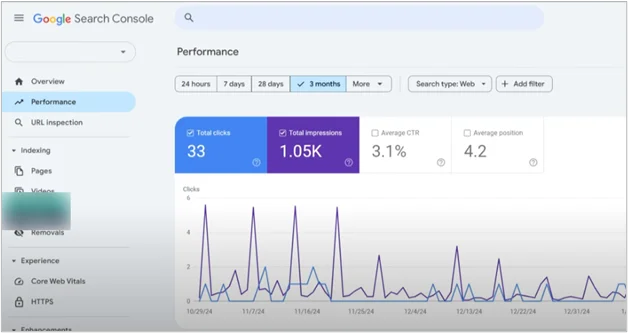
Google Search Console Performance page
The Experience section summarises visitors’ experience on your site through the Core Web Vitals and HTTPs tabs. The Core Web Vitals tab shows your site’s Core Web Vitals metrics with recommendations for improving pages with speed, interactive quality, and visual stability issues.
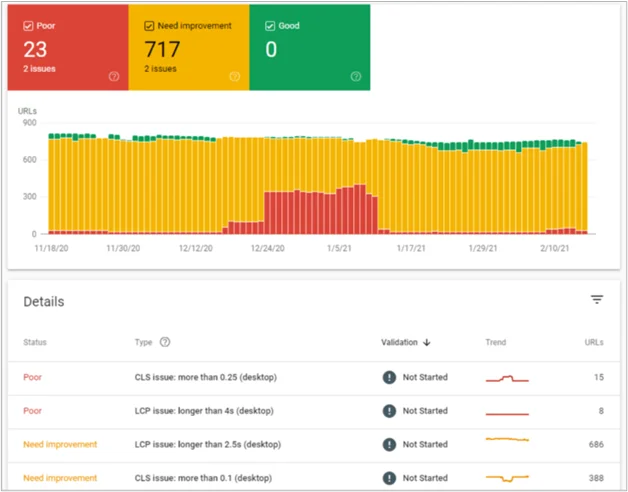
Google Search Console Core Web Vitals report
Thoroughly analyze all your Search Console sections and fix any issues discovered.
3. Monitor Your Keyword Rankings
Consistent keyword tracking gives you an edge and makes your site indomitable whenever there are changes in the SERP.
You can spot ranking changes quickly, analyze them, and act swiftly.
It becomes interesting when you have access to daily SERP changes. Nothing catches you unaware, and you have detailed reports to give your clients about ranking fluctuations.
These are some benefits keyword.com users enjoy while others stare at their rank tracker like it owes them an explanation.
Keyword.com rank tracker offers accurate daily or weekly rank tracking, mobile and desktop position tracking, and shareable white-label ranking reports.
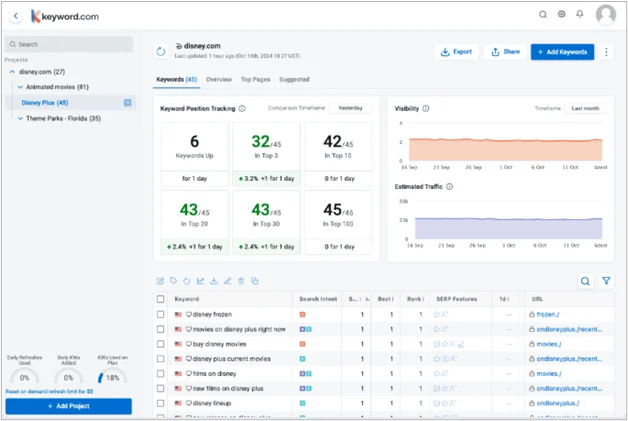
Keyword.com dashboard
The tool also has a live view-key feature that can share live screenshots of the Google SERP results to show exactly where your clients rank in search results.
Most importantly, you don’t have to wait for weekly or monthly reports. Keyword.com offers instant alerts to notify you of real-time SERP changes so that you can track where you stand on SERP.
Start your 14-day free trial to track hundreds of keywords and receive daily updates.
4. Analyze Your Competitors’ Pages
When SERP volatility spikes, your competitors’ pages can show you what still works and what doesn’t work again.
Analyze pages that increased in rankings compared to those that dropped. It could be that what is relevant has changed.
Here are a few things to consider in your competitors’ pages:
- How they covered the topic
- Their historical ranking data: Keyword.com shows your SERP competitors’ keyword rankings over time and offers strategies for outranking them.
- Content updates
- Page structure
- Search intent alignment
- User signals
- Backlink profile
- Keyword optimization, and more.
5. Follow Google’s Search Essentials SEO Checklist
Google shared a detailed report on what to do after a core update to avoid leaving you in the dark.
According to the documentation, site owners were advised to focus on their content.
“…We suggest focusing on ensuring you’re offering the best content you can. That’s what our algorithms seek to reward.”
Then, they provided an updated list of content quality questions:
Content quality questions
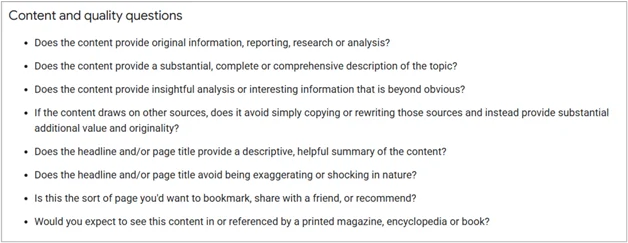
Google’s content quality questions
Expertise and presentation questions
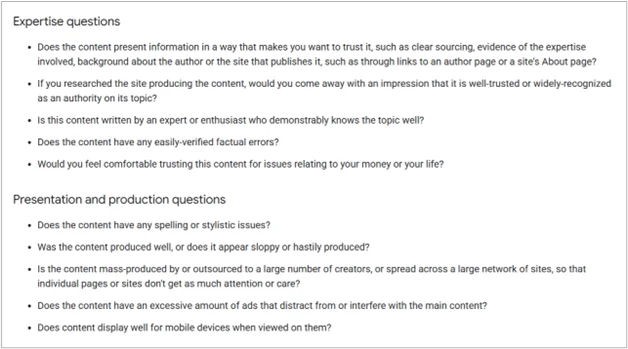
Google’s expertise and presentation questions
Comparative questions

Google’s comparative questions
However, updating and creating quality content alone might not cause tangible results during SERP volatility.
We recommend that you adhere to Google’s Search Essentials documentation, which covers the technical requirements, spam policies, and key best practices.
The requirements listed in the documentation will stabilize your site against storms that might ravage the SERP.
Staying Ahead of SERP Volatility for Long-Term Ranking Stability
John Mueller, Google’s Senior Search Analyst, shared this on X about SERP volatility:
“There is no one-shot secret to long-lasting online success. Even if you find something that works now, the web, user desires, and expectations evolve. It’s good to stay open to change.”
Volatility is the norm, not the exception. And in most cases, rankings that drop suddenly bounce back when the SERP settles. So, instead of chasing every dip, use the SERP Volatility Index to understand the landscape, audit your site thoroughly, analyze competitors, and track your keyword performance intelligently.
Keep your strategy adaptable, your content high-quality, and your data close. That’s how you build durable SEO results—even when the ground keeps shifting.
How to Beat Ranking Fluctuations With Keyword.com
Whether you like it or not, we’re all at the mercy of search engines’ ranking systems.
Ranking systems that skyrocket some sites’ rankings and wipe others off the first page overnight.
But you can stay on guard with a rank-tracking tool. That’s why thousands of SEO agencies rely on keyword.com for rank tracking.
This keyword monitoring tool helps SEO agencies monitor rankings across search engines, uncover valuable insights, and deliver exceptional results for their clients.
See Kevin Fearn, Owner of KF SEO Media, review after using keyword.com.
“I’ve been looking for the right tool to track and monitor keyword rankings for multiple clients/projects. I’ve tried many others but had difficulty finding one that was simple and easy to use with a dashboard that gave me the insights I sought.
I am super happy with Keyword.com’s ease of use, the ability to track multiple projects, and the great visuals and reporting that I can use for clients.”
Check any of the plans to start tracking your keywords.
Let’s see some unique Keyword.com features that make it easy to protect your rankings during SERP volatility:
1. Instant Alerts
Whether it’s a sudden drop in rankings or a significant boost, Keyword.com’s real-time alerts will notify you when any changes occur. No more waiting for daily summaries or manually checking your rankings,
With these updates at your fingertips, you can swiftly identify potential issues before they escalate and respond to any fluctuations in your rankings.
2. Daily, Weekly or Monthly Rank Tracking
You can set your account to receive daily, weekly or monthly keyword ranking reports. You can track the fluctuations in your keyword rankings and analyze the impact of your SEO strategies.
3. Multiple Device and Location Tracking
Keyword.com tracks keyword rankings separately for mobile and desktop searches. You can also track keyword rankings in different localities.
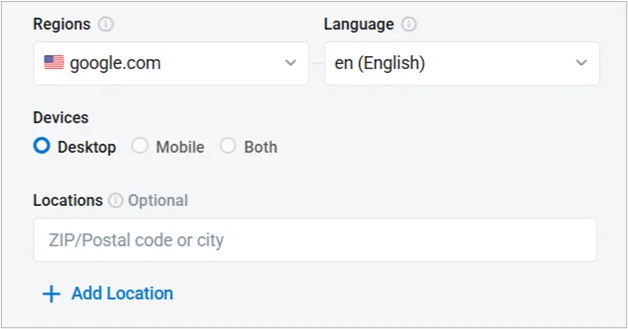
Keyword.com dashboard
4. Competitor tracking
Keyword.com helps you discover your actual SERP competitors before they outrank you. You’ll also see their historical ranking data and strategies to outrank them.
5. Integration with SEO Tools
You can connect your Google Search Console and Analytics account with Keyword.com to view your website’s performance over time comprehensively.
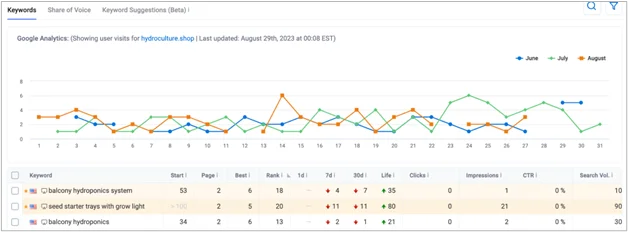
Keyword.com integration with Google Analytics
6. On-Demand Rank Tracking Reports
You can request your keyword ranking reports anytime and have them sent to you instantly. Its one-click shareable dashboard makes maintaining transparency with clients and team members easy.
The reports feature valuable metrics such as current ranking data, a historical ranking chart, keyword movement over time, and more.
You can stay ahead of SERP volatility by creating a new project on keyword.com, uploading your keywords, and tracking their rankings like a trained detective.